What Every Operator and Owner Should Know
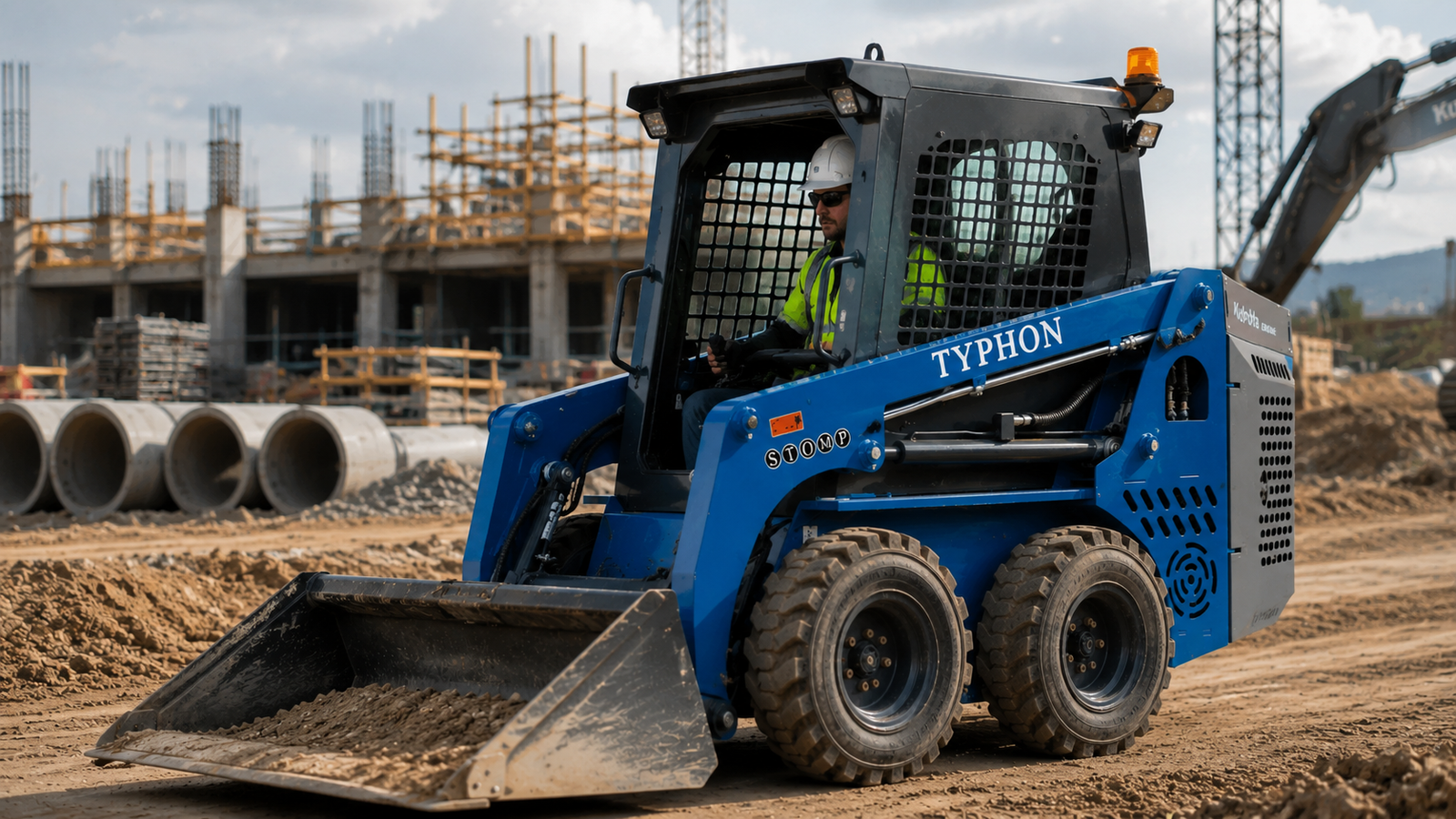
Skid steers are among the most productive and versatile machines on any active construction site. Contractors rely on them to move materials, clear debris, grade surfaces, and power a wide range of hydraulic attachments, often switching between tasks several times in a single shift. Their compact size and exceptional maneuverability make them a natural fit for jobsites where larger equipment simply cannot operate effectively. For many construction businesses, the skid steer is the most frequently used machine in the entire fleet, and that constant deployment reflects just how capable these machines genuinely are.
At the same time, skid steers are consistently ranked among the most dangerous pieces of construction equipment in operation. Rollovers, struck-by incidents, crush injuries, and falls from the machine account for a significant portion of severe construction accidents every year. The question contractors, supervisors, and equipment buyers should be asking is not whether skid steers are dangerous by nature, but whether they are being operated with the discipline, training, and protective systems that the machine demands. Safety is never automatic. It is a direct result of how well the operator understands the machine, how well the machine is maintained, and how seriously the entire crew treats the operating environment.
This guide addresses the question directly: are skid steers safe? We will examine the most significant risks associated with skid steer operation, explore the protective systems and engineering features designed to manage those risks, and detail the operational habits that separate a safe, productive jobsite from a dangerous one. Whether you manage a fleet, supervise a crew, or operate the machine yourself, understanding skid steer safety is one of the most important investments you can make in your business and your people.
Understanding Rollover Risk and What Causes It
Rollovers represent one of the most serious hazards associated with skid steer operation, and understanding why they happen is the first step toward preventing them. A skid steer has a relatively high center of gravity compared to its narrow, compact undercarriage. When the machine travels across slopes, navigates uneven terrain, or carries an elevated load, that center of gravity shifts in ways that can quickly exceed the machine’s stable operating envelope. Many operators underestimate how quickly conditions can change, especially on sites where the terrain is irregular, wet, or undercut by recent excavation.
A significant part of the problem is that skid steers respond to inputs very differently than other equipment. The zero-turn steering system means the machine pivots around its own axis, which feels intuitive in open areas but becomes extremely unpredictable when combined with a raised boom, a heavy bucket of material, or a sloped surface. When an operator makes a sudden turn while the bucket is elevated and loaded, the lateral force combined with the height of the load can push the machine past its tipping point in seconds. These accidents do not usually build slowly. They happen fast, and they are very rarely survivable without proper restraint systems in place.
The solution begins with a thorough understanding of the machine’s stability limits and a strict commitment to operating within them. Experienced operators always lower the boom before traveling, keep loads close to the ground during transport, and reduce speed significantly when approaching any grade change, soft ground, or debris-covered surface. Supervisors must reinforce these habits continuously, because the pressure of a fast-moving jobsite can tempt operators to cut corners. Providing formal training that includes real-world stability awareness, rather than simply reviewing a manual, gives operators the context they need to make sound decisions when conditions change.
The business impact of preventing rollovers is enormous. A rollover accident can end careers, trigger lengthy OSHA investigations, produce massive liability claims, and destroy equipment worth tens of thousands of dollars. Beyond the financial damage, the human cost is immeasurable. By treating rollover prevention as a core operational priority rather than a safety checkbox, contractors protect their crews, their equipment, and the long-term reputation of their business.
Operator Restraint Systems and Why They Are Non-Negotiable
Even on well-managed sites with well-trained operators, unexpected events can still occur. A tire drops into an unmarked trench. The ground gives way on a seemingly stable slope. A sudden obstacle forces an emergency maneuver. In these moments, the difference between a serious injury and a survivable incident often comes down entirely to whether the operator was properly restrained inside the cab. Skid steer restraint systems are specifically engineered for these scenarios, and treating them as optional is one of the most dangerous mistakes an operator can make.
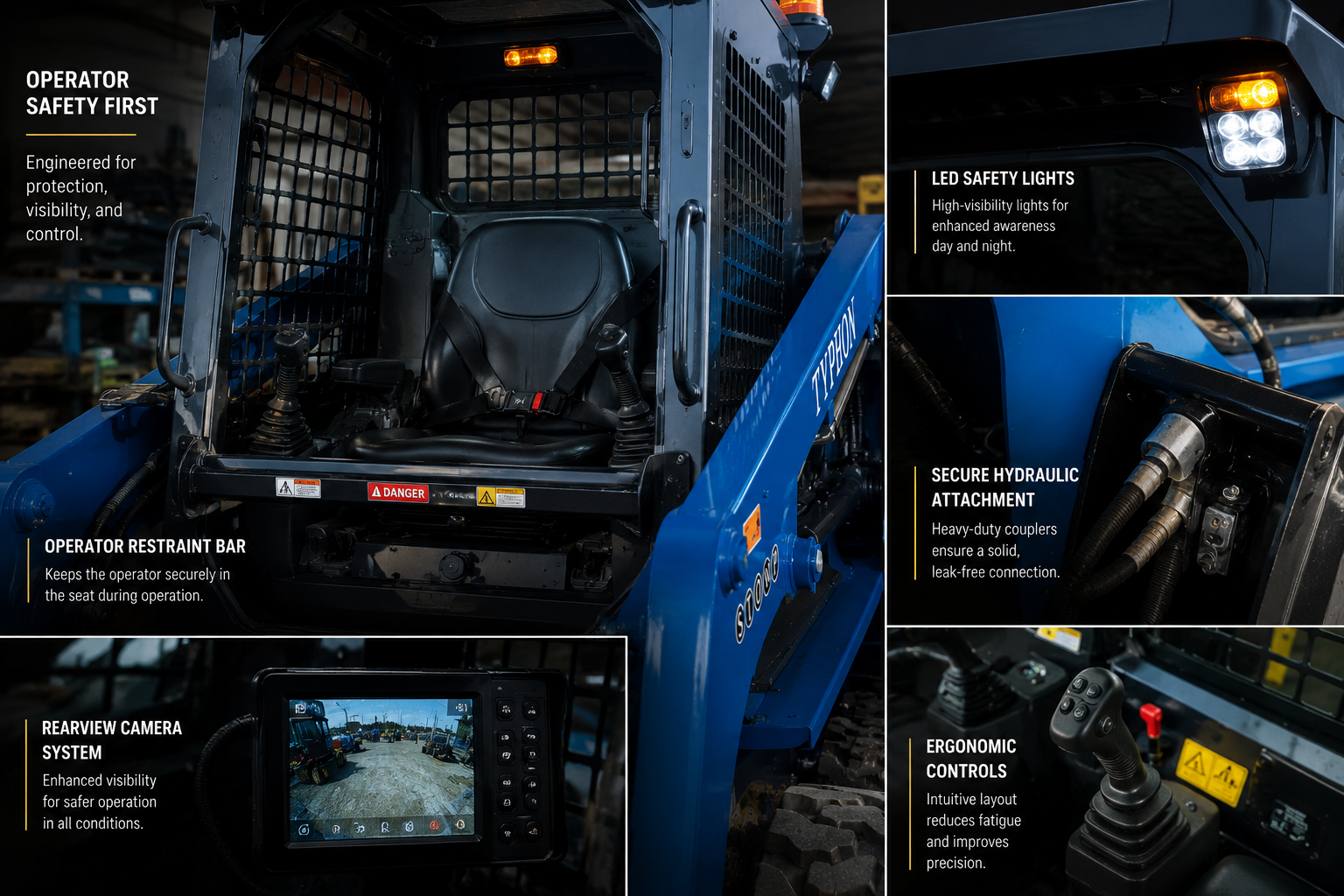
The most critical component of the restraint system is the lap bar or seatbelt, often combined with both. Many modern skid steers use a hydraulic lockout system tied directly to the seat bar, which prevents the boom and auxiliary functions from operating unless the operator is seated and the bar is lowered. Some models incorporate interlocking seatbelt systems that disable certain machine functions if the belt is not buckled. These engineering safeguards exist because decades of accident data clearly show that being ejected from a skid steer during a rollover dramatically increases the chance of fatal injury. When the operator is restrained inside the cab, the rollover protection structure surrounding the seat provides a critical survival zone.
The problem is that impatient or inexperienced operators frequently bypass these systems in the field. On fast-paced jobsites, some operators develop the habit of leaving the seat bar partially raised or unclipping the seatbelt during routine tasks, believing they will be able to react quickly enough if something goes wrong. This logic collapses entirely when a rollover actually occurs, because the machine moves faster than any human reflex. A person ejected from a rolling skid steer has almost no protection against the enormous weight of the machine.
Enforcing proper restraint use requires more than a posted rule. It requires consistent observation, direct conversations with operators, and a clear leadership message that no deadline or productivity target justifies operating without full restraint. For business owners and site supervisors, creating a culture where restraint systems are checked before every shift and treated as a strict non-negotiable directly translates into fewer fatalities and fewer catastrophic liability events. That is a business protection strategy as much as it is a safety one.
Managing Blind Spots and Situational Awareness
The skid steer’s compact body and high-mounted cab create serious visibility challenges that operators must actively manage every time the machine is in motion. The rear counterweight, the cab framing, and the upright boom arms all contribute to significant blind spots that limit what the operator can see without physically repositioning in the seat. In busy construction environments where ground workers, pedestrians, delivery vehicles, and other equipment move constantly in and around the work zone, these blind spots present a persistent and serious hazard.
The fundamental limitation is that a skid steer moves quickly and turns aggressively. An operator who is not constantly aware of what is happening behind and beside the machine can easily back into a worker who stepped into the path just a second earlier. The problem is compounded on large sites where radio communication is unreliable, where visual spotting protocols are not enforced, and where workers develop the habit of walking close to operating machinery because they believe they are visible. In reality, from inside the cab of a loaded skid steer, visibility in certain directions can be severely restricted.
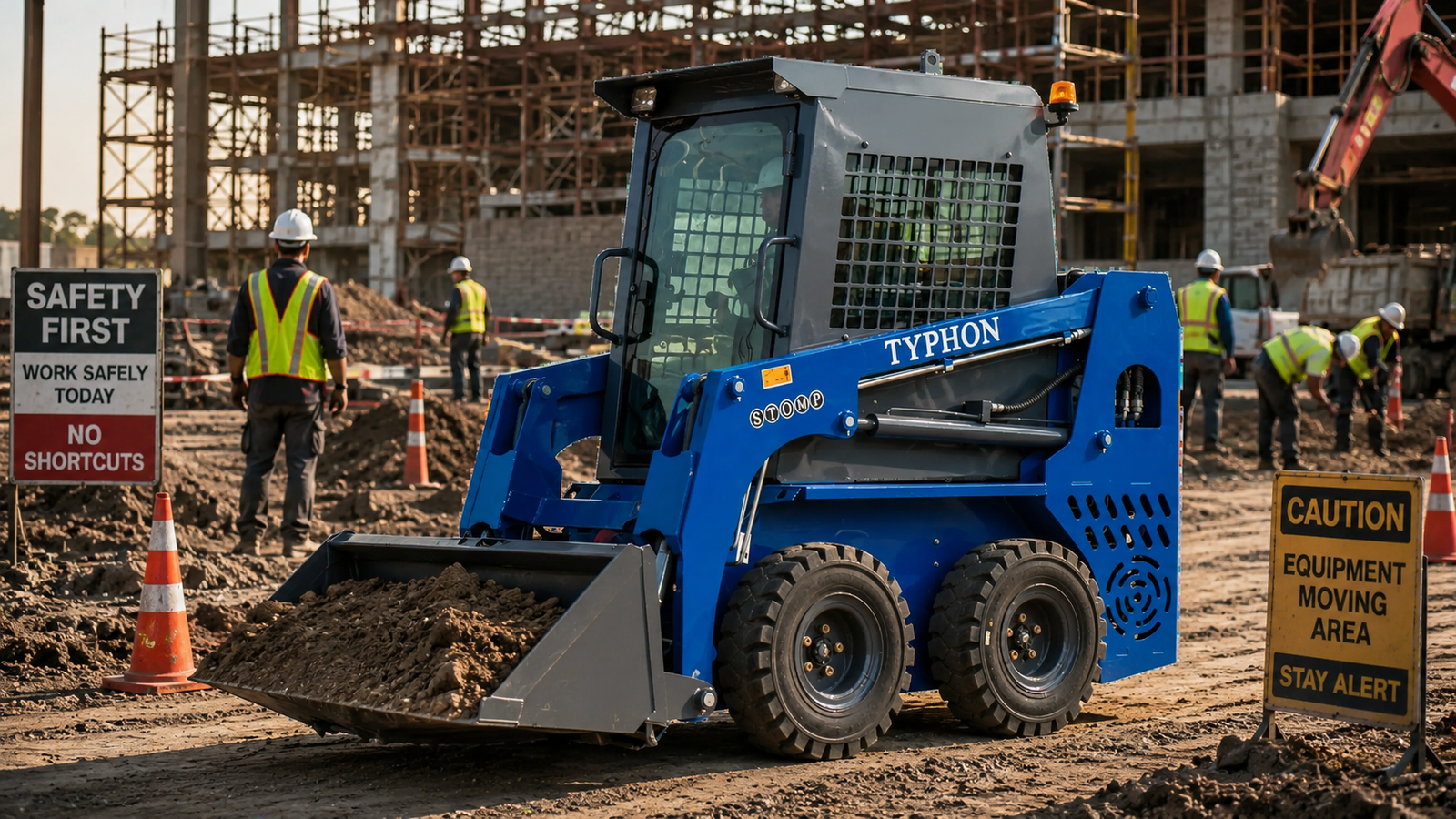
Addressing this challenge requires a combination of equipment features and strictly enforced site protocols. Modern skid steers increasingly offer rearview cameras, wide-angle mirrors, and structured lighting systems that dramatically expand what the operator can monitor. These tools provide value only when operators are trained to use them consistently and to check their surroundings before every movement. On the protocol side, construction sites should clearly define pedestrian exclusion zones around operating equipment and enforce them with physical barriers, flag systems, or designated spotters when conditions require it.
The real-world impact of strong blind spot management is a dramatic reduction in struck-by incidents, which are among the most common and most devastating accidents in construction. When operators adopt the discipline of scanning their surroundings before every movement, and when site managers enforce clear pedestrian control measures, the risk profile of the entire jobsite improves substantially. That improvement means fewer project delays caused by accident investigations, lower workers’ compensation exposure, and a workforce that feels genuinely protected while doing their jobs.
Attachment Safety and Hydraulic Hazard Awareness
One of the defining advantages of the skid steer is its ability to power an enormous range of hydraulic attachments, from augers and breakers to brush cutters, grapples, and cold planers. This versatility makes the machine exceptionally useful across multiple phases of a construction project. However, attachment operations introduce specific safety risks that are distinct from standard bucket work, and many operators are not adequately trained on the hazards associated with the tools they are connecting and using.
The core problem is that improper attachment coupling, over-pressurized hydraulic systems, and failure to understand the attachment’s operating requirements can create extremely dangerous situations. A hydraulic quick coupler that is not fully engaged can release the attachment under load, dropping hundreds of pounds of steel without warning. A hydraulic breaker operated by someone who does not understand its torque output can shatter concrete in unexpected directions, creating projectile risks for nearby workers. Grapple and clamping attachments that are commanded by someone unfamiliar with their geometry can easily crush materials, structures, or people outside the operator’s direct field of vision.
Safe attachment practices start with thorough pre-use inspection and coupling verification every single time an attachment is connected. Operators must confirm the locking pins are fully seated, the hydraulic couplers are properly engaged and not weeping fluid, and the attachment is functioning within its rated pressure range. Beyond mechanical checks, operators must understand the specific behavior of each attachment they use, including its reach, its force output, its discharge direction, and its potential failure modes. Supervisors should never assume that an operator skilled with one attachment is automatically proficient with another.
The business impact of attachment safety directly affects both worker protection and equipment longevity. An improperly coupled attachment that drops mid-operation can kill a worker and destroy a machine in the same instant. A hydraulic line that fails due to over-pressure and lack of inspection can cost thousands of dollars in repairs and spray high-pressure fluid that causes severe burns. Investing the time to train operators on each specific attachment they will use, and to enforce pre-use inspection as a standard procedure, eliminates a significant category of preventable incidents.
Safe Entry, Exit, and Ground Interaction Practices
Among the most overlooked aspects of skid steer safety is the process of entering and exiting the machine itself. Falls from equipment represent a major category of construction injuries, and the skid steer presents specific fall hazards that are closely tied to the way the cab is designed. Many skid steers are entered and exited from the front, requiring the operator to step up onto the toe plates and lower themselves past the raised boom arms. When operators rush this process, particularly at the end of a long shift or when the machine is parked on uneven terrain, the risk of a serious fall is very real.
The limitation here is often one of habit rather than awareness. On active jobsites, workers frequently carry tools in their hands, wear bulky personal protective equipment, and step on and off machinery dozens of times a day without treating each transition as a deliberate safety task. Wet or muddy toe plates, a boom left partially raised, or a machine parked at an angle across a slope can all make a simple exit dangerous. Ground workers standing too close to the machine during entry and exit add another layer of risk, particularly if the operator has limited downward visibility.
The professional solution involves establishing clear habits around every machine interaction. Operators must use three points of contact during entry and exit, secure tools before climbing, confirm the boom is fully lowered, and check that the machine is on level ground before stepping off. No one should be standing within the machine’s immediate footprint when the operator is entering or exiting. These practices should be formally taught during onboarding and regularly reinforced by supervisors during site walk-throughs.
Ground interaction safety extends to how the machine is parked at the end of a shift or during breaks. A skid steer left idling with the boom raised and the engine running is an immediate hazard to anyone who walks nearby. The bucket or attachment can drop if hydraulic pressure fades, and the machine can be set in motion by someone unfamiliar with the controls. Proper shutdown procedure means the boom is fully lowered, the engine is off, the key is removed, and the machine is parked on stable, level ground away from excavations and traffic lanes.
Training, Maintenance, and the Culture of Accountability
All the safety features and operating protocols in the world deliver limited value without a genuine culture of accountability supporting them. Skid steer safety ultimately comes down to whether the people operating and managing these machines treat them with the respect that their power demands. That respect is built through formal training, consistent supervision, disciplined maintenance, and a leadership posture that treats safety as a permanent operating standard rather than a response to incidents after they occur.
The most persistent limitation on construction sites is the assumption that experience alone qualifies someone to operate a skid steer safely. In practice, informal experience without structured training often means an operator has learned habits that feel efficient but bypass critical safety steps. Someone who has operated a skid steer for years without a serious incident may have developed a false confidence about what they can skip. Formal operator training that covers machine dynamics, stability limits, restraint systems, attachment safety, emergency procedures, and terrain awareness gives experienced and new operators alike a shared, reliable foundation.
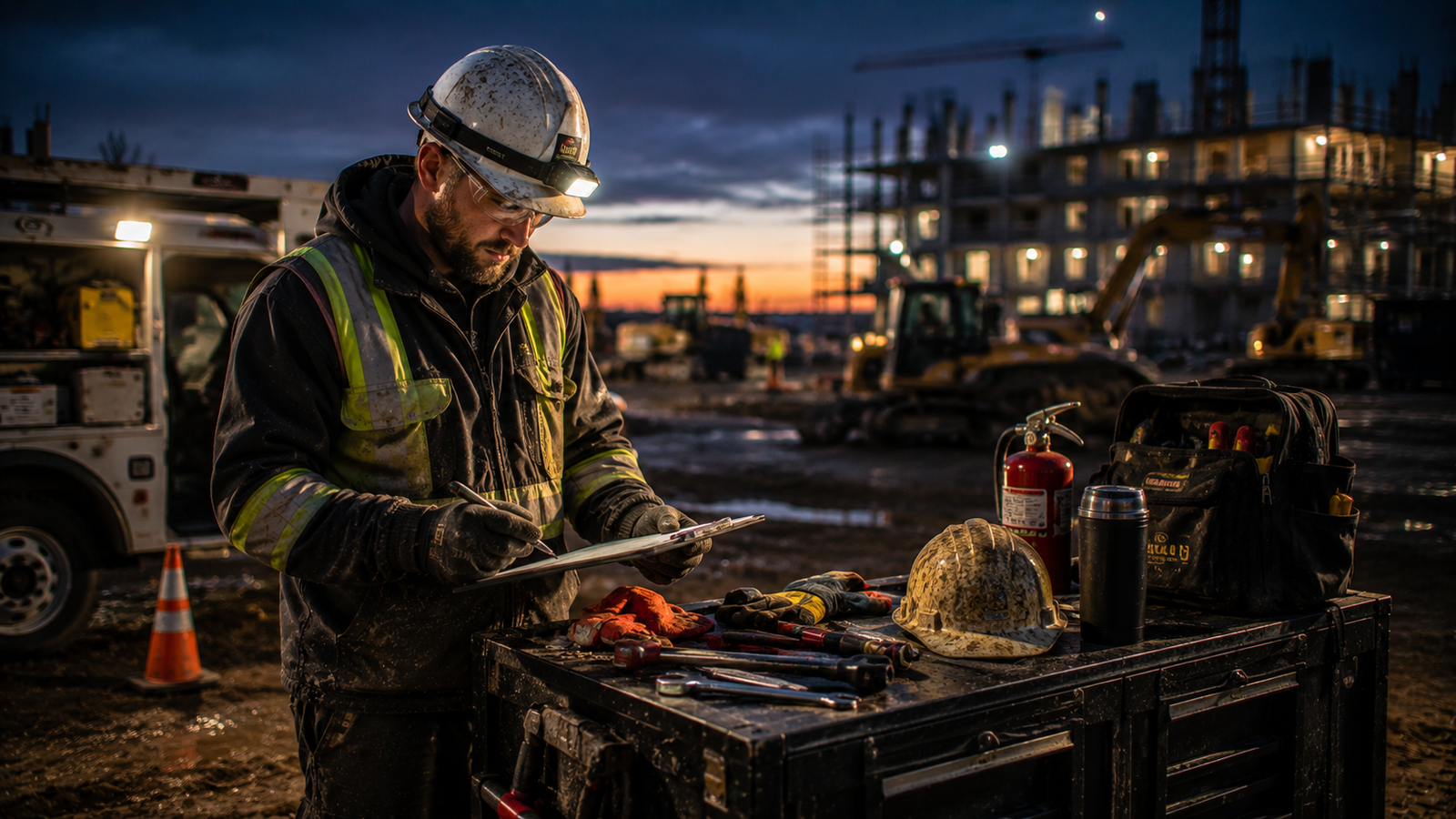
Maintenance plays an equally important role in ensuring the machine performs safely under working conditions. A skid steer with worn tires, a malfunctioning seat bar interlock, a leaking hydraulic hose, or a damaged bucket cutting edge does not behave the way the operator expects it to. Pre-shift inspections must be executed thoroughly and documented consistently. When an operator reports a mechanical concern, that concern must be addressed before the machine returns to service. Allowing compromised equipment to stay in operation sends a clear message that productivity is valued above safety, which erodes the entire culture you are trying to build.
The business impact of a strong safety culture is both immediate and compounding. Fewer incidents mean fewer work stoppages, lower insurance claims, reduced regulatory exposure, and better workforce retention. Workers who trust that their employer takes safety seriously tend to take it seriously themselves, which makes every site safer over time. For contractors and construction business owners, investing in operator training, enforcing maintenance protocols, and leading by example are not just good safety practices. They are the foundations of a more professional, more competitive, and more sustainable operation.
Conclusion
Are skid steers safe? The honest answer is that they can be, but only when they are operated by trained, disciplined crews on well-managed sites with properly maintained equipment. The machine itself is not inherently reckless. It is powerful, responsive, and exceptionally capable when treated with the respect its engineering demands. When that respect is absent, the same qualities that make skid steers so productive become the source of serious, preventable harm.
For contractors, construction business owners, jobsite supervisors, and equipment buyers, the commitment to skid steer safety must be active and ongoing. It requires investing in formal operator training, enforcing restraint systems without exception, managing visibility and blind spot risks, ensuring attachments are connected and operated correctly, and maintaining every machine in your fleet to a consistent, documented standard. Safety is not a burden on productivity. It is the foundation that makes sustainable productivity possible. Build that foundation properly, and your skid steer becomes exactly what it was designed to be: one of the most reliable and efficient machines on the jobsite.